





Cabo de las Huertas

ROUTE:

4.35 km

DURATION:

2 hours 30 minutes

DIFFICULTY:

Easy

The ancient Cap de l’Alcodre

Bounding to the north-east the bay of Alicante, between the beaches of Albufereta and San Juan, Cabo de las Huertas receives its name from the vanished Alicante farmland irrigated largely by the water of the Monnegre River which, after the construction of the Tibi dam at the end of the 16th century, allowed the expansion of its irrigation based on a system of irrigation channels to nearby areas such as La Condomina. But in ancient times this cape was known as l’Alcodre, coming from the Arabic al-kodra “the green one”, an etymology that would give way to the current name.

Trail Stops

All Routes in Alicante

Route A

Maritime facade of Alicante

Route B

Santa Barbara Castle

Route C

Old Town of Alicante

Route D

The Traditional Downtown of Alicante

Route E

Alicante Air Raid Shelters

Services that might interest you

AGUITUR
Tourist guides accredited by the Valencian Tourism Agency
Tourist guides accredited by the Valencian Agency of Tourism
ALACANT CIRCUIT

icono +34 601 039 933
icono +34 685 829 937
icono info@alacantcircuit.com
icono www.alacantcircuit.com

Tourist guides accredited by the Valencian Tourism Agency
Tourist guides accredited by the Valencian Agency of Tourism
BLUEMED TOURS S.L

icono C/ Pintor Aparicio, 28 E-1, 03003, Alicante

icono +34 679 899 880
icono central@bluemedtours.com
icono www.bluemedtours.com
Facebook Instagram

SICTED Quality Seal
L'Exquisit Mediterrani
CREATURISME VALENCIAN
COMMUNITY CULTURAL
CREATURISME VALENCIAN
COMMUNITY WINE TOURISM
ALICANTE CONVENTION BUREAU
ALICANTE WINE ROUTE

Tourist guides accredited by the Valencian Tourism Agency
Tourist guides accredited by the Valencian Agency of Tourism
Languages/ Idiomas: English, Español, Français, Valencià
Esatur XXI, S.L.

icono Calle Arzobispo Loaces, 3, 03003, Alicante
icono +34 966 377 034
icono info@esatur.com
icono www.estaturservicios.com
Facebook Instagram

SICTED Quality Seal
ISO 9001
ISO 14001
ISO 27001

Tourist guides accredited by the Valencian Tourism Agency
Tourist guides accredited by the Valencian Agency of Tourism
Languages/ Idiomas: English, Español, Valencià
FREE WALKING TOURS ALICANTE
Facebook Instagram Tripadvisor

Tourist guides accredited by the Valencian Tourism Agency
Tourist guides accredited by the Valencian Agency of Tourism
OXYTOURS
Facebook Instagram X tripadvisor

Tourist guides accredited by the Valencian Tourism Agency
Tourist guides accredited by the Valencian Agency of Tourism
TRAMUNTANA AVENTURA

icono C/ Rabasa, 3, Local 1, 03005, Alicante
icono +34 686 216 102
icono info@tramuntanaaventura.es
icono www.tramuntanaventura.es
Facebook Instagram Tripadvisor

Q for Tourism Quality Certification
SICTED Certificate
Tourist guides accredited by the Valencian Tourism Agency
Tourist guides accredited by the Valencian Agency of Tourism
TURIGUIAS

icono Calle del Teatro 41, 4 IZQ, 03001, Alicante
icono +34 686 469 916
icono +34 654 486 777
icono contact@turiguiasalicante.com
icono www.turiguiasalicante.com
Facebook Instagram

SICTED Quality Certificate

Tourist guides accredited by the Valencian Tourism Agency
Tourist guides accredited by the Valencian Agency of Tourism
ULA Guides

icono Marina Deportiva, Mlle. Levante, 6, 03001, Alicante
icono +34 677 299 150
icono ula_sp@hotmail.com
Facebook Instagram

SICTED Quality Seal

Tourist guides accredited by the Valencian Tourism Agency
Tourist guides accredited by the Valencian Agency of Tourism
Languages/ Idiomas: Deutsch, English, Español, Français, Italiano, Valencià, others

Alicante By Bike & Rentals Tours

icono C/ Cienfuegos, 1, 03002, Alicante
icono +34 605 097 063
icono info@alicantebybike.com
icono www.alicantebybike.com
Bike Rent in Alicante

icono C/ Bailén, 14, Local 1, 03001, Alicante
icono +34 605 657 496
Blue Bike | Rental & Tour

icono C/ Mayor 45, 03002, Alicante
icono info@bluebike.es
icono www.bluebike.es
Rent Point- Rent Bike Alicante

icono C/ Navas 11, 03001, Alicante
icono +34 658 348 218
icono rentpointalicante@gmail.com
icono www.rentpointalicante.com
Bikes&City Alicante – Alquiler, rutas

icono C/ San Vicente 61, 03004, Alicante
icono +34 966 376 596
icono www.bikesandcity.com

BLUE BIKE ALICANTE

icono C/ Mayor, 45, 03002, Alicante
icono +34 674 676 362
icono www.bluebike.es
ESATUR
SEGWAY ALICANTE

icono +34 656 332 485
icono +34 966 272 837
SIS TOURS EVENTS

Facebook

TRAMUNTANA AVENTURA

icono C/ Rabasa, 3, 03005, Alicante
icono +34 686 216 102
icono +34 616 35 1506
icono info@tramuntanaaventura.es
icono www.tramuntanaaventura.es

AKRAVIBE

icono C/ Castaños, 42, 03003, Alicante
icono +34 965 168 907
icono www.akravibe.es
AVENTURERO CATAMARÁN S.L

icono Av. Conde de Vallellano, s/n, 03001, Alicante
icono +34 694 443 820
icono info@alicantecatamaran.com
icono www.alicantecatamaran.com
ALICANTE RACING QUADS RENT

icono Mlle. Poniente, 6, 03001, Alicante
icono +34 697 207 904
icono alicanteracingquads@gmail.com
ALIJETSET

icono Mlle. Levante, 8, Local 4, 03001, Alicante
icono +34 627 031 220
icono +34 660 731 819
icono info@alijetset.com
icono www.alijetset.com
AWANA

icono Av. Condomina 70 BL5 E15, 03540, Alicante
icono +34 636 852 977
icono info@awanamountains.com
icono www.awanamountains.com
BLUE VALLEY

icono Av. Costa Blanca, 114, 03540, Alicante
icono +34 635 230 672
icono +34 645 392 021
icono info@bluevalleyco.com
CENTRO BUCEO ALTAIR

icono C/ Rosa Chacel, 20 local D, 03008, Alicante
icono +34 634 959 013
icono buceoaltair@gmail.com
icono www.alicantebuceo.es

Facebook
Instagram
CLUB DE SURF EL MORENO

icono C/ Deportista Juan Mato, 4, 03016, Alicante
icono +34 649 556 696
icono elmorenosurf@gmail.com
icono www.clubsurfelmoreno.com
EPICALBOATS

icono Marina Deportiva, 03001 Alicante
icono +34 605 729 918
icono info@epicalboats.es
icono www.epicalboats.es
ENERGY ACTIVE CLUB

icono Av. de la Costa Blanca, 114, 03540, Alicante
icono +34 635 230 672
icono www.energyactiveclub.com
FANAUTIC CLUB ALICANTE

icono C/ Currica, 1, 03590, Alicante
icono +34 639 661 398
icono alicante@fanauticclub.com
icono www.fanauticclub.com

Facebook
Instagram
X
HIKINGALICANTE

icono C/ Miraflor 1, 03005, Alicante
icono +34 660 507 225
icono info@hikingalicante.com
icono hikingalicante.com


Instagram
X
LLOGA UN LLAÜT

icono Mlle. de Levante 8, s/n, 03113, Alicante
icono +34 680 191 313
icono info@llogaunllaut.es
icono www.llogaunllaut.es
MARINA JETS S.L

icono Mlle. de Levante Tinglado 21A, 03002, Alicante
icono +34 602 585 243
icono marinajets.sl@gmail.com


Instagram
OXYTOURS

Facebook
Instagram
X
Tripadvisor
PARASAILING ALICANTE

icono Mlle. 14, Zona de Levante, S/N, 03001, Alicante
icono +34 674 444 747
icono info@parasailingalicante.com
icono reservas@parasailingalicante.com
icono www.parasailingalicante.com
Facebook
Instagram
SIS TOURS EVENTS

icono Av. Miriam Blasco, 2, 03540, Alicante
icono +34 627 168 907
icono +34 609 291 993
icono info@sistorsevents.com
icono www.sistoursevents.com

Facebook
X
TERRENODEAVENTURA

icono C/ Enric Valor 12-73 03540 Playa de San Juan (Alicante)
icono +34 687469836
icono terrenodeaventura@gmail.com
icono www.nativojaime.blogspot.com
TRAMUNTANA AVENTURA

icono C/ Segura, 13, Bajo derecha, 03004, Alicante
icono +34 686 216 102
icono info@tramuntanaaventura.es
icono www.tramuntanaventura.es

ALICANTE RACING QUADS RENT

icono C/ de Sant Agustí, 3, 03002, Alicante
icono +34 697 207 904
icono alicanteracingquads@gmail.com
OXYTOURS

Facebook
Instagram
X
Tripadvisor
TRAMUNTANA AVENTURA

icono C/ Rabasa, 3, 03005, Alicante
icono +34 686 216 102
icono +34 616 35 1506
icono info@tramuntanaaventura.es
icono www.tramuntanaaventura.es

* Important Notice

The Alicante Municipal Tourist Board is not responsible for any changes that may occur in contact details, opening hours, locations of accommodation, restaurants, tourist service companies, and transport, as well as in the city’s cultural facilities. It is recommended to verify the information beforehand.

Events calendar

No event found!

The Cabo de las Huertas has a very particular terrestrial vegetation adapted to the characteristics of the environment, such as the sea daisy (Asteriscus maritimus), the rush crown vetch (Coronilla juncea), or rock samphire (Crithmum maritimum), highlighting some endemic species of the province of Alicante such as Senecio auricula and, above all, the Alicante sea lavender (Limonium furfuraceum).

Regarding marine vegetation, along the shoreline or among the rocks, remains of Posidonia oceanica and some seaweeds are easily detected. Posidonia is a plant endemic to the Mediterranean and has remarkable ecological importance since it forms underwater meadows, constitutes the climax community of the Mediterranean Sea, and plays a significant role in protecting the coastline against erosion.

Regarding fauna, we distinguish species of coastal birds or seabirds such as the great cormorant (Phalacrocorax carbo), Audouin’s gull (Larus audouinii) and the Sandwich tern (Sterna sandvicensis). In addition, the presence of other water-dependent birds can be observed, such as the little egret (Egretta garzetta), the Kentish plover (Charadrius alexandrinus), the ruddy turnstone (Arenaria interpres) and the whimbrel (Numenius phaeopus).

The urban pressure of the last 30 years caused the Cape to undergo a major transformation. However, and possibly due to the orography, some areas partially escaped urbanisation, preserving their environmental value. Currently, Cabo de las Huertas has a flora micro-reserve in Cala Cantalar and is part of the Sites of Community Importance (SCI) of the Valencian Community proposed in the Natura 2000 Network (European Union), protecting the Posidonia oceanica meadows and the rocky seabeds of high environmental quality.

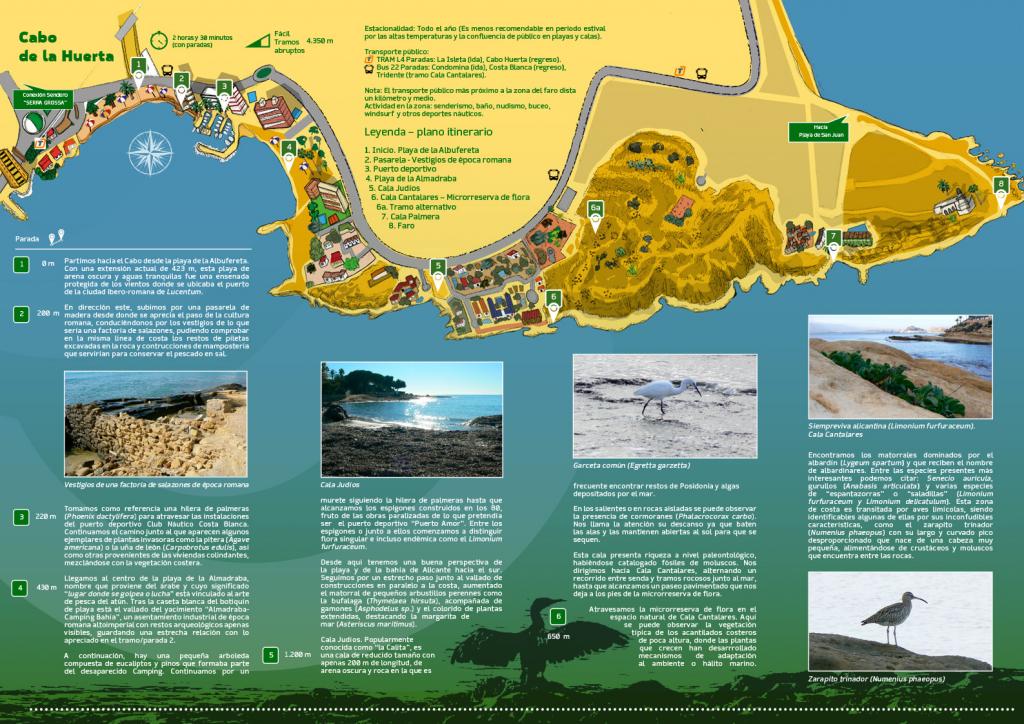
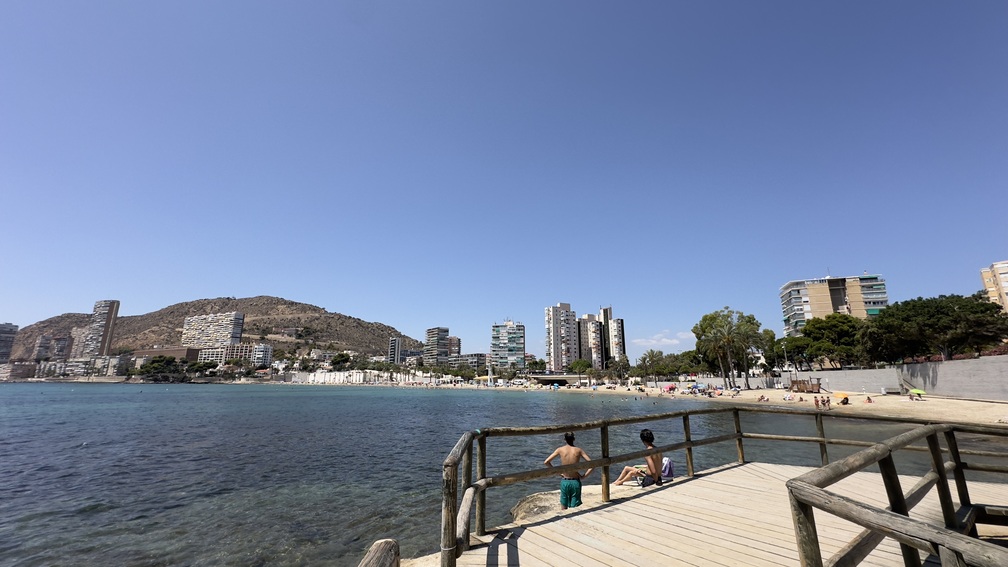
1. Albufereta Beach

0 meters

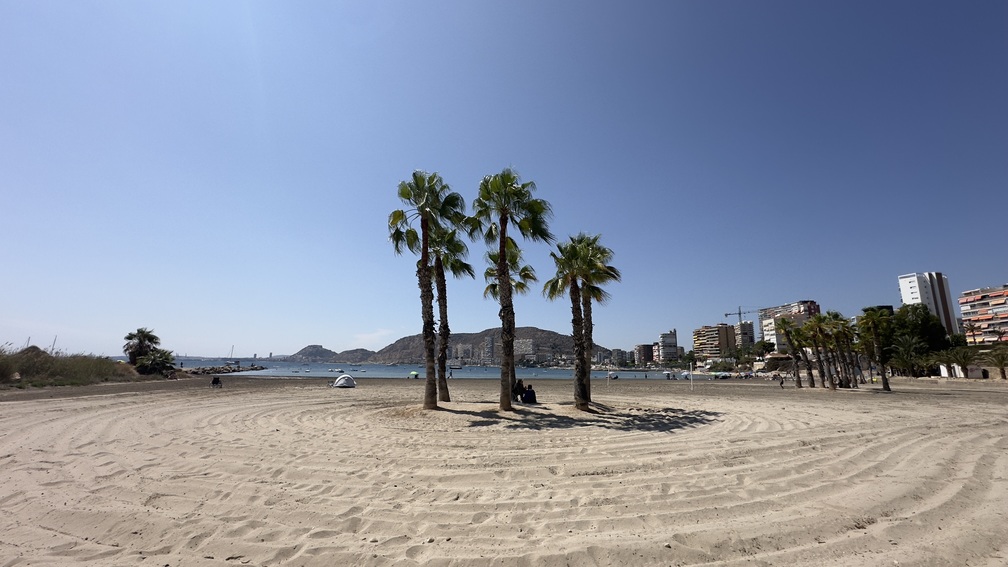
We depart for the Cape from Albufereta Beach. Stretching 423 meters, this beach of dark sand and calm waters was once a sheltered cove that served as the port for the Iberian-Roman city of Lucentum.

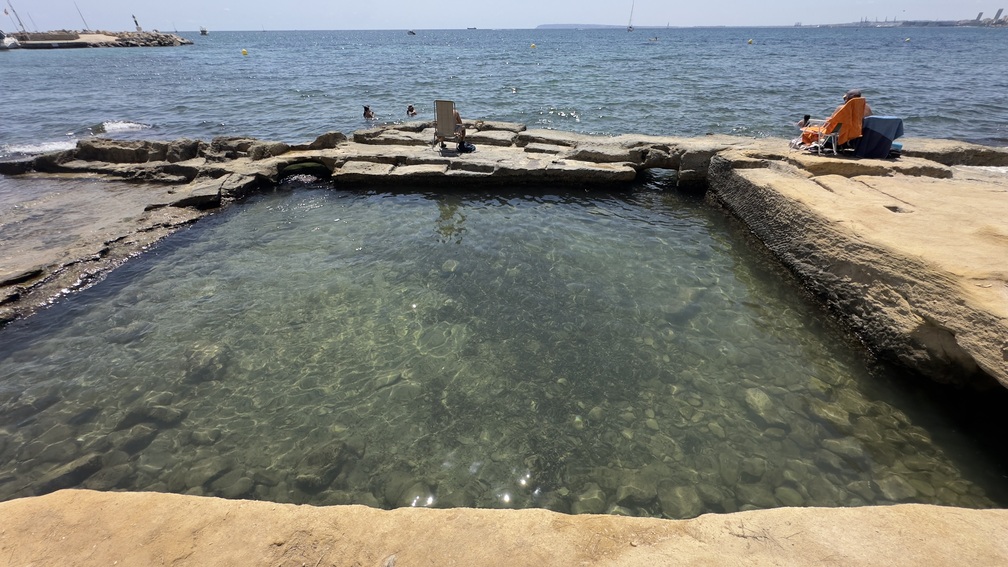
2. Remains from the Roman period

200 meters

Heading east, we climb a wooden walkway, where remnants of Roman culture can be seen. The path leads us past the ruins of a seaside villa, and along the coastline, we can spot the remains of a Roman fish nursery.

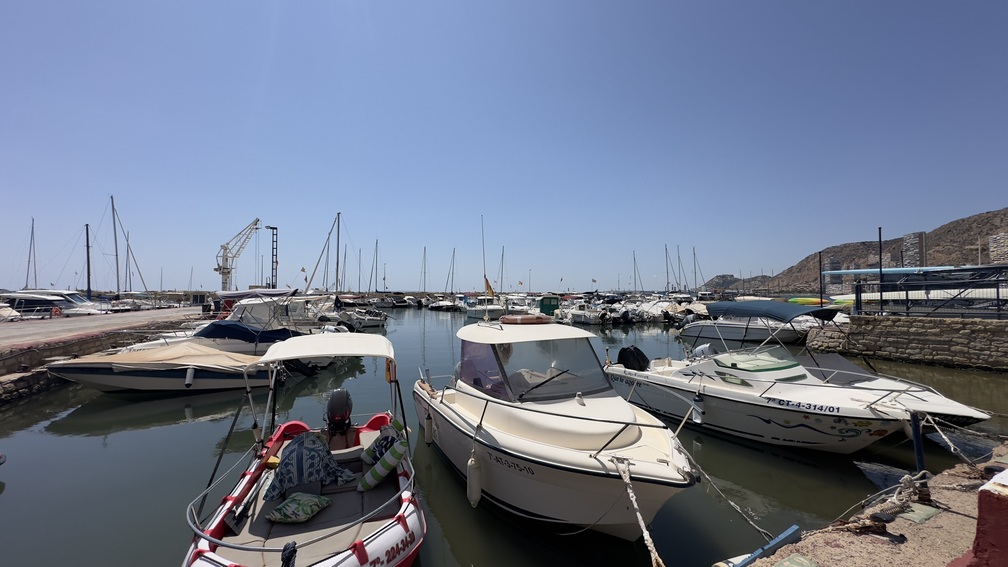
3. Marina

220 meters

Using a row of palm trees (Phoenix dactylifera) as a guide, we pass through the Costa Blanca Yacht Club. Along the way, invasive plants like agave (Agave americana) and ice plant (Carpobrotus edulis) mingle with local coastal vegetation.

4. Almadraba Beach

430 meters

We arrive at Almadraba Beach, a name derived from Arabic meaning “place of striking or fighting,” linked to traditional tuna fishing. Behind the white beach first aid hut lies the fenced-off archaeological site of “Almadraba Camping Bahía,” an industrial settlement from the Roman Imperial period, with barely visible remains closely related to the ones at Stop 2. Nearby is a small grove of eucalyptus and pine trees, once part of a now-defunct campsite. Continuing along a low wall lined with palm trees, we reach breakwaters built in the 1980s, remnants of the halted “Puerto Amor” marina project. Here, we start to see unique and even endemic plants like Limonium furfuraceum. From this point, there’s a beautiful view of the beach and Alicante Bay to the south. We follow a narrow path alongside fenced-off properties, where low shrubs such as Thymelaea hirsuta thrive, accompanied by wildflowers like Asphodelus sp. and bright coastal plants, including the sea daisy (Asteriscus maritimus).

5. Cala Judios

1200 meters

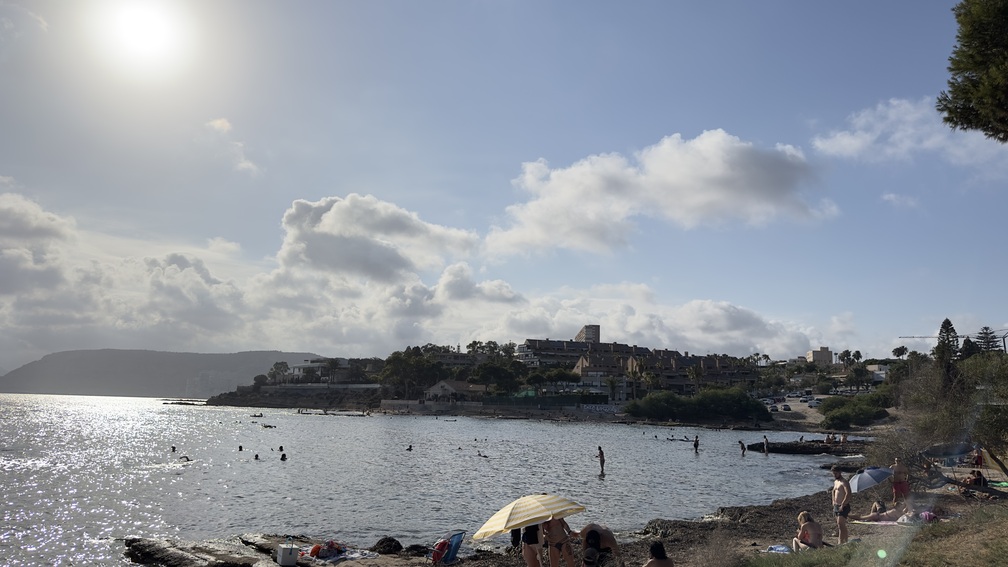
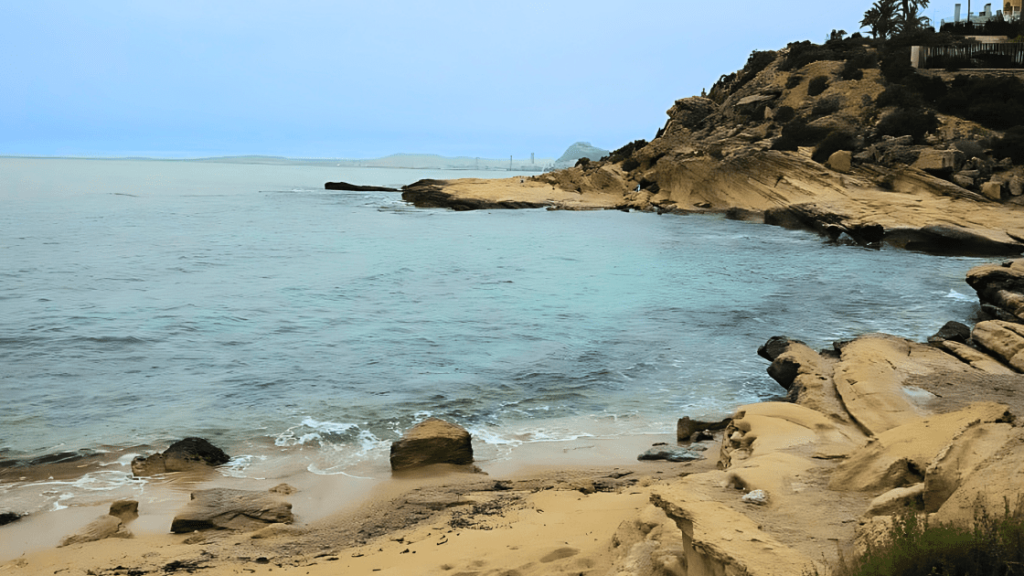
Cala Judíos. Popularly known as “la Calita”, is a small cove just 200 m long, with dark sand and rock where it is common to find remains of Posidonia and seaweeds washed ashore.

On the rocky outcrops or isolated rocks, one can observe the presence of cormorants (Phalacrocorax carbo). Their resting behaviour catches our attention as they flap their wings and hold them open in the sun to dry.

This cove features paleontological richness, with fossilised molluscs having been catalogued. We head towards Cala Cantalar, alternating a route between a footpath and rocky stretches along the sea, until we reach a paved promenade that leaves us at the foot of the flora micro-reserve.

6. Cala Cantalar

650 meters

We cross the flora micro-reserve in the natural area of Cala Cantalar. Here you can observe the typical vegetation of low coastal cliffs, where the plants growing have developed mechanisms to adapt to the marine environment and sea breeze. We find scrublands dominated by esparto grass (Lygeum spartum), known as esparto fields. Among the most interesting species present, we can highlight: Senecio auricula, jointed Anabasis (Anabasis articulata), Alicante sea lavender (Limonium furfuraceum), and various species of sea lavenders (Limonium delicatulum). This stretch of coast is frequented by waders, some of which are identifiable by their unmistakable features, such as the whimbrel (Numenius phaeopus) with its long, curved, disproportionate beak extending from a tiny head, feeding on crustaceans and molluscs found among the rocks.

From here, we ascend a few metres along a path that gradually takes on a steeper terrain, using the boundary markers that delineate the coast as a reference, guiding us through an immersive landscape resulting from erosion on limestone rocks.

Alternative section

This section of just half a kilometre crosses the natural area of Cala Cantalar, located between the flora micro-reserve and the garden next to the sundial known as “el barquito”, connecting with Costa Blanca Avenue. Reforestation efforts have been carried out in the area, combining thermo-Mediterranean scrubland with isolated groups of Aleppo pines (Pinus halepensis). At the upper part, a path marked with wooden posts ascends to a viewpoint with diverse panoramic views.

7. Cala Palmera

1000 meters

We have walked through an area next to coastal platforms where we can see the little egret (Egretta garzetta) stirring the silt with its feet to bring out fish and crustaceans. On the platforms adjacent to Cala Palmera, we can easily identify fossil traces and appreciate the contrast of the surfaces covered with a mantle formed by green algae (Chlorophyta) such as Ulva compressa. Heading towards the lighthouse, we continue along the upper path following the metal fence that borders it, passing by an old quarry.

8. Lighthouse

650 meters

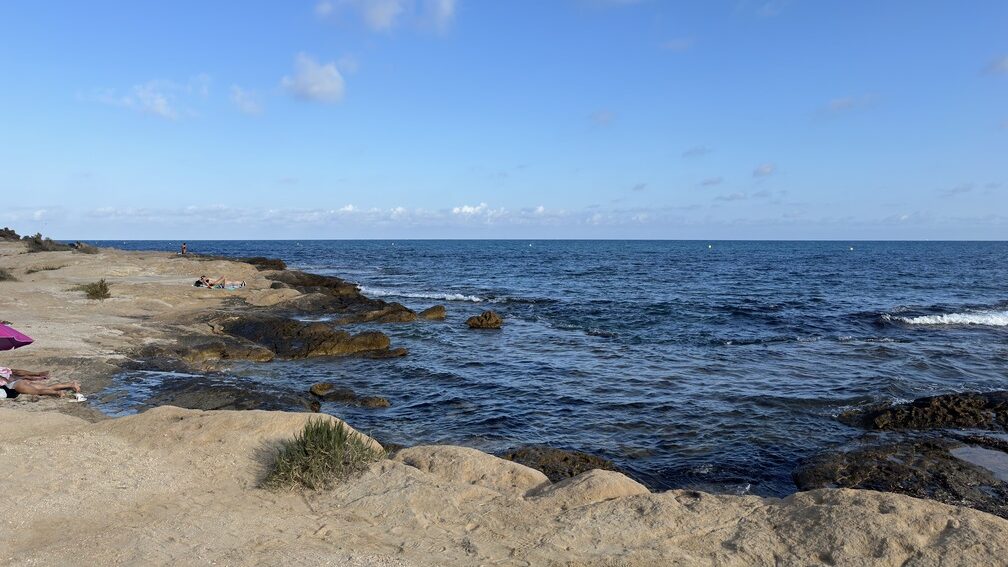
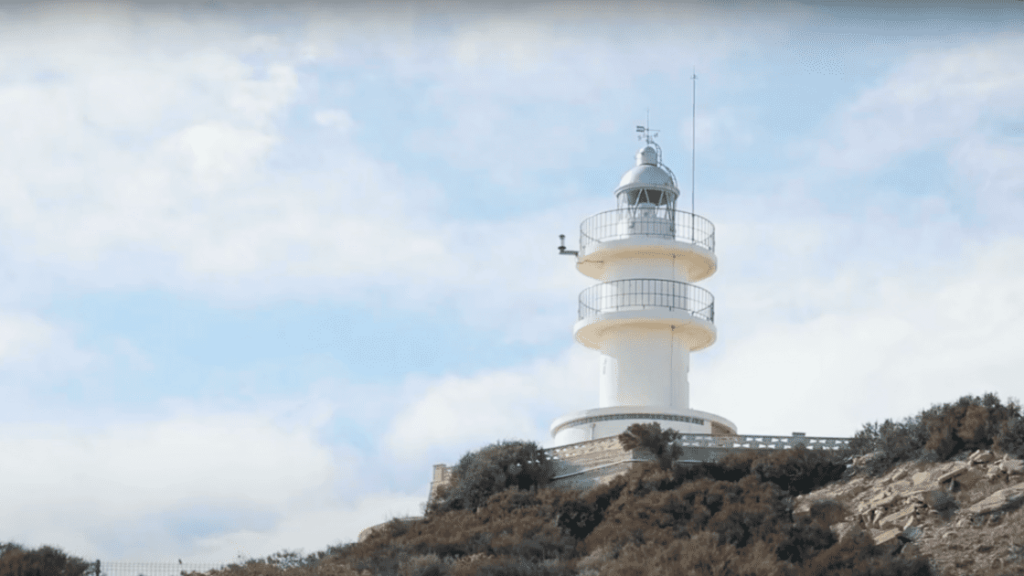
We are located under the lighthouse, one of the last inhabited by lighthouse keepers in the province of Alicante. This circular lighthouse and cylindrical volume stands on the remains of the watchtower of l’Alcodre which was built in the 16th century with the main mission of watching the arrival of Barbary pirates. We descend towards the easternmost tip of the Cape, leaving behind us a small cliff, finding an ideal place to observe the curious geomorphology of the area, appreciating the cracks and bars that have a jagged appearance on the coast, with inlets where the strata of calcarenites are less resistant. Opposite, on isolated rocks, it is common to find the occasional cormorant (Phalacrocorax carbo) in the company of groups of Audouin’s gulls (Larus audouinii). From here we have a good perspective of the beach of San Juan towards El Campello and, as a whole, a panoramic view of the Alicante mountains: the Cabeço d’Or, Aitana, the Puig Campana, the Serra Gelada, and the island of Benidorm at the east end.

A few meters from the Lighthouse, in the direction of San Juan beach, our trail ends at a clear example of angular unconformity, a stratigraphic discontinuity that separates a lower rock assemblage belonging to the Upper Miocene (between 8 and 10 million years old) from an upper one from the Quaternary, with marine sediments of what would be a fossil beach from 100,000 years ago (Tyrrhenian).

The Cabo de las Huertas has a very particular terrestrial vegetation adapted to the characteristics of the environment, such as the sea daisy (Asteriscus maritimus), the rush crown vetch (Coronilla juncea), or rock samphire (Crithmum maritimum), highlighting some endemic species of the province of Alicante such as Senecio auricula and, above all, the Alicante sea lavender (Limonium furfuraceum).

Regarding marine vegetation, along the shoreline or among the rocks, remains of Posidonia oceanica and some seaweeds are easily detected. Posidonia is a plant endemic to the Mediterranean and has remarkable ecological importance since it forms underwater meadows, constitutes the climax community of the Mediterranean Sea, and plays a significant role in protecting the coastline against erosion.

Regarding fauna, we distinguish species of coastal birds or seabirds such as the great cormorant (Phalacrocorax carbo), Audouin’s gull (Larus audouinii) and the Sandwich tern (Sterna sandvicensis). In addition, the presence of other water-dependent birds can be observed, such as the little egret (Egretta garzetta), the Kentish plover (Charadrius alexandrinus), the ruddy turnstone (Arenaria interpres) and the whimbrel (Numenius phaeopus).

The urban pressure of the last 30 years caused the Cape to undergo a major transformation. However, and possibly due to the orography, some areas partially escaped urbanisation, preserving their environmental value. Currently, Cabo de las Huertas has a flora micro-reserve in Cala Cantalar and is part of the Sites of Community Importance (SCI) of the Valencian Community proposed in the Natura 2000 Network (European Union), protecting the Posidonia oceanica meadows and the rocky seabeds of high environmental quality.

1. Albufereta Beach

0 meters

We depart for the Cape from Albufereta Beach. Stretching 423 meters, this beach of dark sand and calm waters was once a sheltered cove that served as the port for the Iberian-Roman city of Lucentum.

2. Remains from the Roman period

200 meters

Heading east, we climb a wooden walkway, where remnants of Roman culture can be seen. The path leads us past the ruins of a seaside villa, and along the coastline, we can spot the remains of a Roman fish nursery.

3. Marina

220 meters

Using a row of palm trees (Phoenix dactylifera) as a guide, we pass through the Costa Blanca Yacht Club. Along the way, invasive plants like agave (Agave americana) and ice plant (Carpobrotus edulis) mingle with local coastal vegetation.

4. Almadraba Beach

430 meters

We arrive at Almadraba Beach, a name derived from Arabic meaning “place of striking or fighting,” linked to traditional tuna fishing. Behind the white beach first aid hut lies the fenced-off archaeological site of “Almadraba Camping Bahía,” an industrial settlement from the Roman Imperial period, with barely visible remains closely related to the ones at Stop 2. Nearby is a small grove of eucalyptus and pine trees, once part of a now-defunct campsite. Continuing along a low wall lined with palm trees, we reach breakwaters built in the 1980s, remnants of the halted “Puerto Amor” marina project. Here, we start to see unique and even endemic plants like Limonium furfuraceum. From this point, there’s a beautiful view of the beach and Alicante Bay to the south. We follow a narrow path alongside fenced-off properties, where low shrubs such as Thymelaea hirsuta thrive, accompanied by wildflowers like Asphodelus sp. and bright coastal plants, including the sea daisy (Asteriscus maritimus).

5. Cala Judios

1200 meters

Cala Judíos. Popularly known as “la Calita”, is a small cove just 200 m long, with dark sand and rock where it is common to find remains of Posidonia and seaweeds washed ashore.

On the rocky outcrops or isolated rocks, one can observe the presence of cormorants (Phalacrocorax carbo). Their resting behaviour catches our attention as they flap their wings and hold them open in the sun to dry.

This cove features paleontological richness, with fossilised molluscs having been catalogued. We head towards Cala Cantalar, alternating a route between a footpath and rocky stretches along the sea, until we reach a paved promenade that leaves us at the foot of the flora micro-reserve.

6. Cala Cantalar

650 meters

We cross the flora micro-reserve in the natural area of Cala Cantalar. Here you can observe the typical vegetation of low coastal cliffs, where the plants growing have developed mechanisms to adapt to the marine environment and sea breeze. We find scrublands dominated by esparto grass (Lygeum spartum), known as esparto fields. Among the most interesting species present, we can highlight: Senecio auricula, jointed Anabasis (Anabasis articulata), Alicante sea lavender (Limonium furfuraceum), and various species of sea lavenders (Limonium delicatulum). This stretch of coast is frequented by waders, some of which are identifiable by their unmistakable features, such as the whimbrel (Numenius phaeopus) with its long, curved, disproportionate beak extending from a tiny head, feeding on crustaceans and molluscs found among the rocks.

From here, we ascend a few metres along a path that gradually takes on a steeper terrain, using the boundary markers that delineate the coast as a reference, guiding us through an immersive landscape resulting from erosion on limestone rocks.

Alternative section

This section of just half a kilometre crosses the natural area of Cala Cantalar, located between the flora micro-reserve and the garden next to the sundial known as “el barquito”, connecting with Costa Blanca Avenue. Reforestation efforts have been carried out in the area, combining thermo-Mediterranean scrubland with isolated groups of Aleppo pines (Pinus halepensis). At the upper part, a path marked with wooden posts ascends to a viewpoint with diverse panoramic views.

7. Cala Palmera

1000 meters

We have walked through an area next to coastal platforms where we can see the little egret (Egretta garzetta) stirring the silt with its feet to bring out fish and crustaceans. On the platforms adjacent to Cala Palmera, we can easily identify fossil traces and appreciate the contrast of the surfaces covered with a mantle formed by green algae (Chlorophyta) such as Ulva compressa. Heading towards the lighthouse, we continue along the upper path following the metal fence that borders it, passing by an old quarry.

8. Lighthouse

650 meters

We are located under the lighthouse, one of the last inhabited by lighthouse keepers in the province of Alicante. This circular lighthouse and cylindrical volume stands on the remains of the watchtower of l’Alcodre which was built in the 16th century with the main mission of watching the arrival of Barbary pirates. We descend towards the easternmost tip of the Cape, leaving behind us a small cliff, finding an ideal place to observe the curious geomorphology of the area, appreciating the cracks and bars that have a jagged appearance on the coast, with inlets where the strata of calcarenites are less resistant. Opposite, on isolated rocks, it is common to find the occasional cormorant (Phalacrocorax carbo) in the company of groups of Audouin’s gulls (Larus audouinii). From here we have a good perspective of the beach of San Juan towards El Campello and, as a whole, a panoramic view of the Alicante mountains: the Cabeço d’Or, Aitana, the Puig Campana, the Serra Gelada, and the island of Benidorm at the east end.

A few meters from the Lighthouse, in the direction of San Juan beach, our trail ends at a clear example of angular unconformity, a stratigraphic discontinuity that separates a lower rock assemblage belonging to the Upper Miocene (between 8 and 10 million years old) from an upper one from the Quaternary, with marine sediments of what would be a fossil beach from 100,000 years ago (Tyrrhenian).